
The Visalia Ransacker, The Original Nightstalker, The East Area Rapist–these were all names for the man later known as the infamous Golden State Killer.

Now in 2023, we’ve discovered Joseph DeAngelo, Jr., was the man responsible for thirteen murders and more than fifty rapes during his decades long crime spree. What took so long to catch this predator? What finally came together to unmask DeAngelo, and why did he stop and disappear?
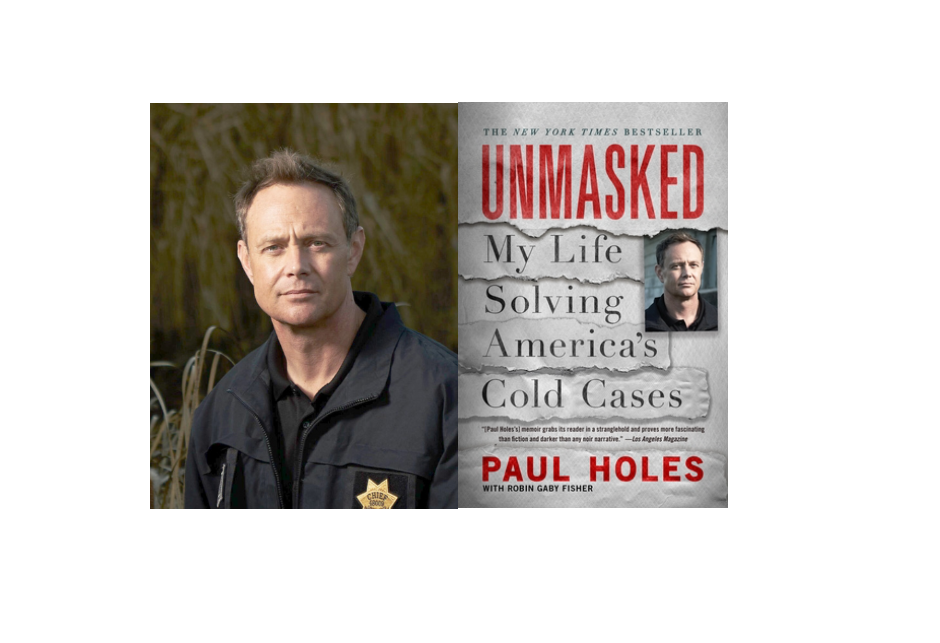
These were among the questions I had when I had the chance to sit down with Paul Holes, the former Contra Costa County cold case investigator who retired after twenty-seven years chasing ghosts. We met at the Book Passage bookstore prior to Paul’s scheduled event, and we had a chance to compare scars, as it were, after both of us stepped away from jobs that in a way defined us. We bonded over bourbon in the bookstore’s green room and talked about the cases that still haunt both of us.
It was my pleasure to moderate Paul’s appearance at Book Passage where was going to meet with nearly a hundred fans. I wanted to know if there were any subjects off limits when it came to talking about his book, Unmasked: My Life Solving America’s Colds Cases. Turns out, there really wasn’t anything he wouldn’t talk about. From the near misses on the investigation of unsolved crimes attributed to the Golden State Killer, or the strain and eventual collapse of his marriage from the long hours and an obsession with finding out who was responsible for the crimes that terrorized California.
I’m not generally a true crime fan. I find much of it glorifies the crimes and the killers. Forgotten in those stories are the real-life victims. Paul made it very clear, both in the book and in person, he was about telling the victim’s story. He does it in a way that honors their memory and let those attending know the dead were daughters, mothers, and sons who lost their lives at the hands of a predator. He made a point of explaining the difference between real crime (the kind of brutal, visceral crime that those in law enforcement professions face every day) and true crime (the filtered and sanitized versions of crime stories put out for public consumption).
His obsession with finding the Golden State Killer began years ago when he came upon a box of files gathering dust in the crime lab. They turned out to be the unsolved rape cases that were attributed to the East Area Rapist who began his attacks in the Sacramento area. Those files would lead to a much broader connection to other crimes, and eventually more than a dozen murders.
For years, Holes tried to broaden the investigation into the East Area Rapist. The statute of limitations on these old rape cases had expired and couldn’t be prosecuted. County administrators were less than willing to spend scarce resources on a case that would never see the courtroom. Still, an obsession kept Holes pursuing these cases from the 1970’s.
In 1997, forensic technology was evolving, and Holes was able to apply this new DNA tool to extract the first DNA profile from rape kits that had been in storage for over twenty years. The East Area Rapist now had a DNA sample to compare against known suspects.
When similar crimes were discovered in Southern California with an identical MO involving residential burglary, torero and sexual assault, it seemed a no-brainer to use the DNA profile to compare against. Unexpected political resistance stopped the investigation in its tracks. Holes found a way around posturing politicians and bureaucracy and eventually pushed southern California crime labs and the two series of crimes were connected–the East Area Rapist and the Original Nightstalker were one and the same.
With a DNA profile, everyone thought it would be simple work to compare it against suspects and against CODIS, the state’s new automated DNA database. Years of chasing suspects and clearing them one by one using the DNA profile he’d so hard to obtain was so frustrating that after clearing one suspect he was so certain was the Golden State Killer, Holes never wanted to hear the words East Area Rapist again.
By 2017 Holes had exhausted all his leads and the task force was running dry. After twenty-three years, Holes believed he was going to be one more investigator who tried and failed to unmask the Golden State Killer. Until he learned of a case in San Bernardino solved through a type of genetic genealogy. All they needed was a specific SNP profile to compare against. And the Orange County District Attorney refused to hand it over as they wanted to be the ones to break the case open.
Ventura County, another location where the Golden State Killer hunted was more than willing to work with Holes, and now the FBI, to close these cold cases. Within days, FamilyTreeDNA developed the SNP sample needed and Holes uploaded the DNA of the killer into the GED-Match database to search over 2.5 million profiles.
That sample soon focused on relatives of Joseph DeAngelo and the more Holes learned about him, he was certain he had the Golden State Killer–an ex-cop and he had lived in or traveled to all the East Area Rapist, and Visalia Ransacker locations. DeAngelo had been fired from the Auburn Police Department for shoplifting dog repellent and duct tape. The former Chief of Police reported his daughter spotted a man outside her window in the days after DeAngelo was fired.
Out of an abundance of caution, secondary samples were taken from garbage DeAngelo put out on the curb. The secondary DNA results confirmed DeAngelo was the Golden State Killer.
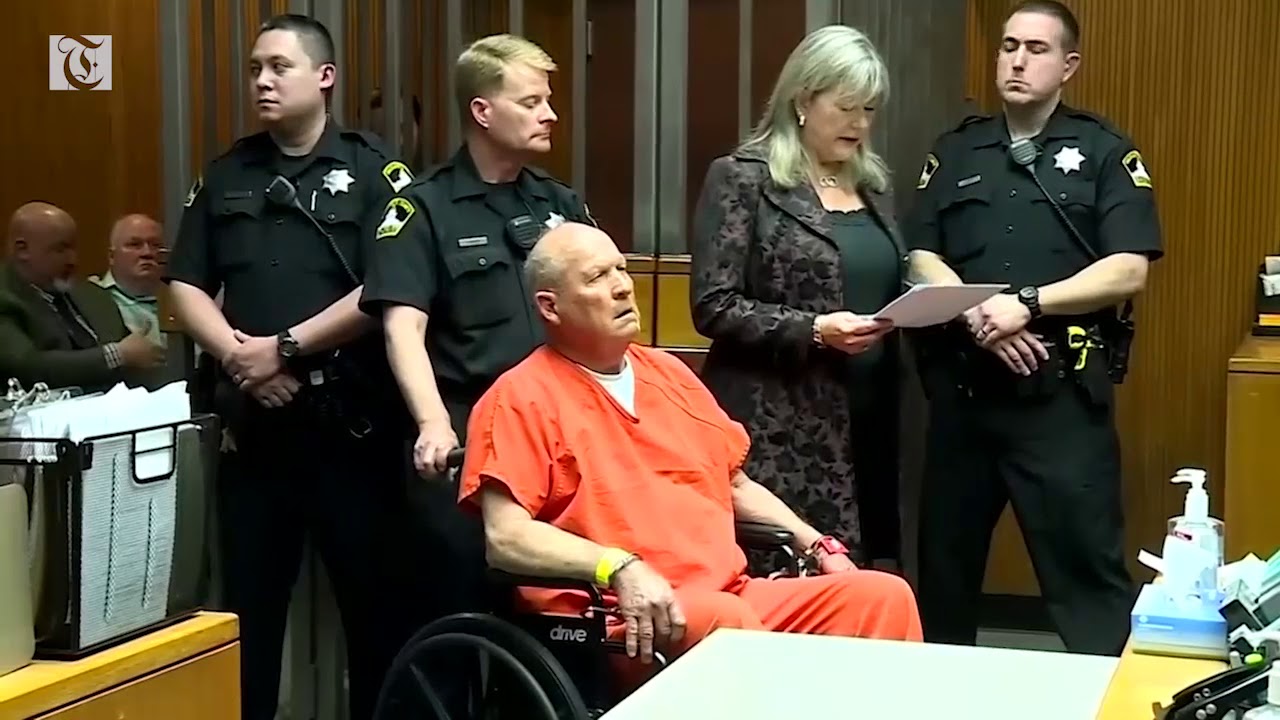
After spending time with Paul Holes, reading his account of the search for the killer, I have to believe that if it weren’t for his determination, and obsession, we might have never discovered the killer living among us.
Here’s a link to the event Paul and I did at Book Passage: You can find links to our books there. If you’re a true crime fan you have probably run across his book. But if you want a look at the inside of an investigation, this is a good one.
Hope you enjoyed this recap of the time I spent with Paul. Let me know what you think. and thanks for reading.


 James L'Etoile