
We’ve launched a new series over here called Book Shots. It features some of the top mystery writers working today. No one has time to doom scroll endlessly to find a YouTube clip of an interview. We’re giving you quick Book Shots of authors and their newly released books.
Some may be familiar faces, and others–well, you might just find your new favorite author. You may have caught the interview with Daniella Bernett
So, sit back, relax, and pour yourself the libation of your choice and enjoy Book Shots with Author Baron Birtcher.
Baron is the winner of the Will Rogers Medallion for Best Western Mystery (Knife River); winner of the Silver Falchion Award (Hard Latitudes); Winner of Killer Nashville Readers Choice Award (South California Purples); and Best Book of the Year Award (Fistful Of Rain). He is the author of the Sheriff Ty Dawson series, which has been described as “Longmire meets Yellowstone in the 1970s”
Birtcher has also been nominated for the Lefty Award, the Nero, the Foreword Indie, the Claymore, the Xanadu and the Pacific Northwest’s Spotted Owl Awards.
NYT Bestselling author Don Winslow says, “You want to read Birtcher’s books, then you want to live in them.”
NYT Bestselling author Reed Farrel Colerman says “Birtcher is part poet, part philosopher and a consummate writer. You need to read his books.”
Baron’s writing has received starred reviews and been hailed as “The real deal” by Publishers Weekly; and “Solid, Fluent and Thrilling” by Kirkus.
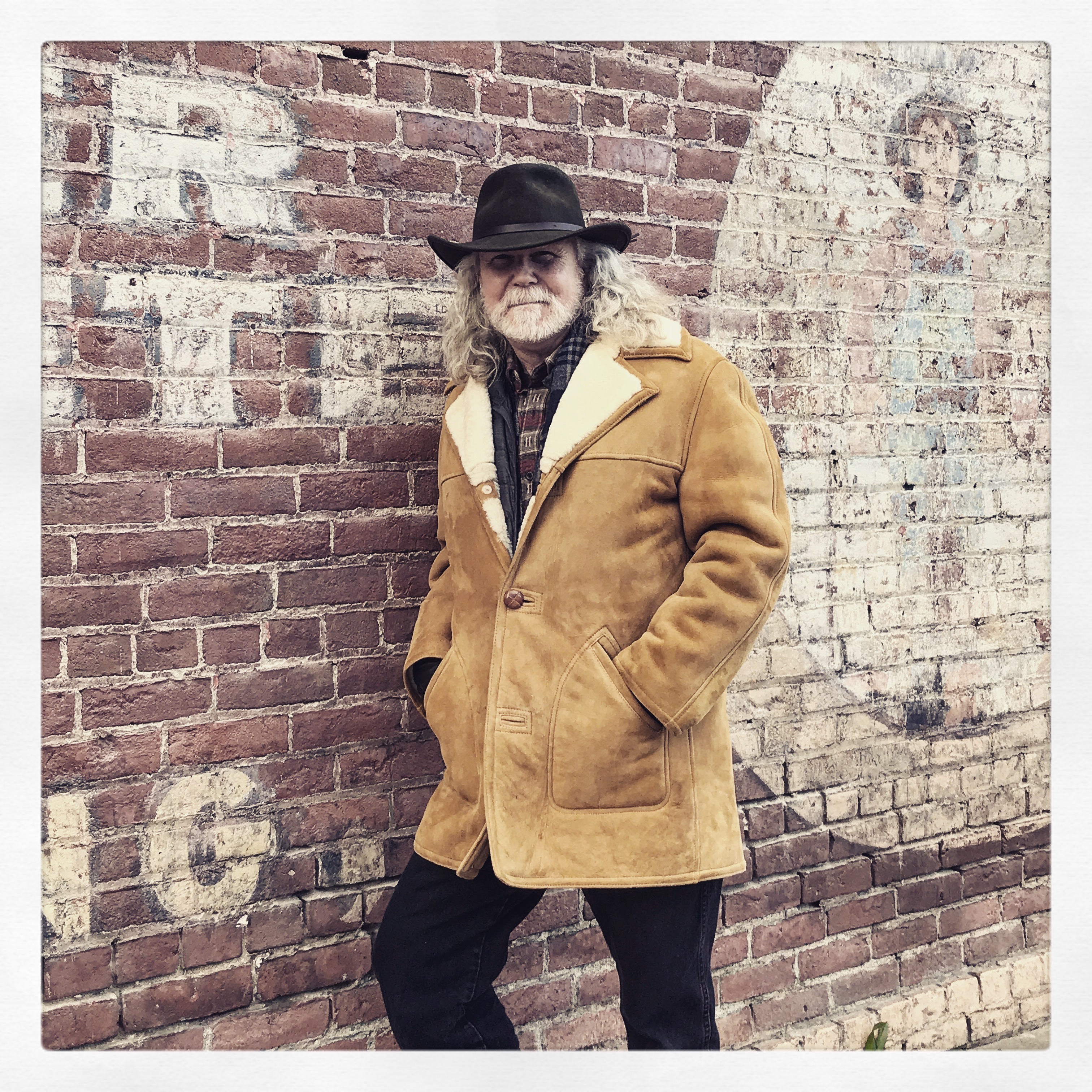
Baron is a fan favorite and I count myself in that number. His most recent work features the Ty Dawson series, including South California Purples, Fistful of Rain, Reckoning, and Knife River. He has a new installment in the series on deck, so what better time to get to know this great new police procedural series.
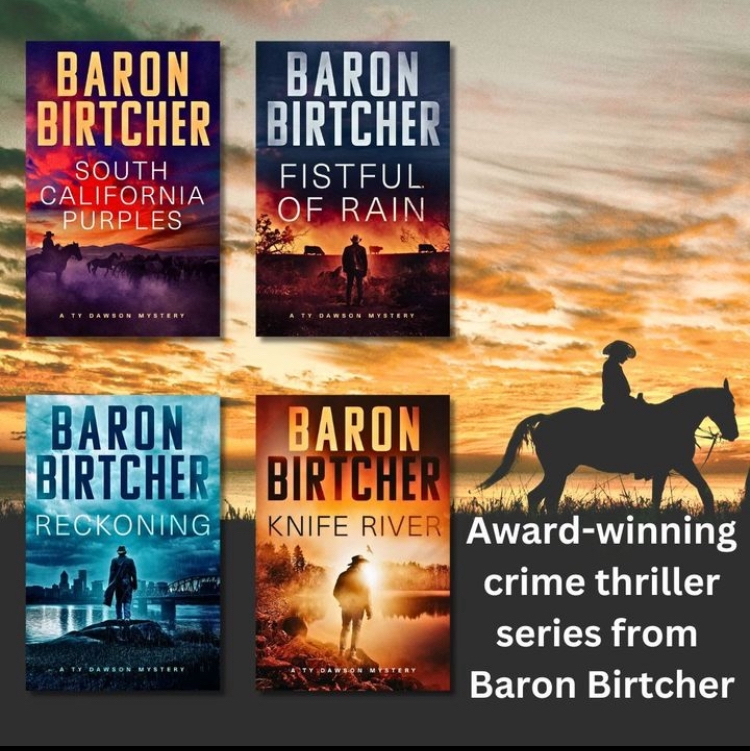
Q: Ty Dawson first appeared in South California Purples (great title by the way). What drove you to switch from the Mike Travis series and introduce Ty Dawson in a new and very different setting?
I grew up on a small horse ranch in southern California, in San Juan Capistrano, an area that was (at the time) characterized by vast cattle ranches, orange groves, fruit and vegetable farms, and beach culture (Dana Point is right next door). I have always been a reader, being drawn first to mysteries and police procedurals, and later to historical fiction and western literature. I was a musician for a number of years, and later founded a small record label and management company.
After selling my company and retiring from the music business, my wife and I left California for Hawaii, where we lived in Kona for over 15 years–and I pursued a dream of writing my first novel–Roadhouse Blues, a hard-boiled police procedural featuring ex-LA detective Mike Travis. I was fortunate that Roadhouse Blues met with a certain degree of success, became an LA TIMES bestseller, and enabled me to continue the Mike Travis series. I wrote all four books in that series, plus a related stand-alone called Rain Dogs, while living in Hawaii, the setting for the Mike Travis series.
All of which is to say that I love to immerse myself the real-world environment where I set my books. I like to incorporate my feelings for a place and its sights, smells, food, culture and people into my stories.
So, when we had our first grandchild (born on the mainland), it was clear that continuing to live in Hawaii would not be conducive to being active grandparents from 2,000 miles away, so we elected to move to a small ranch in the Willamette Valley, a short distance from Portland, Oregon. It is here that I rekindled my fondness for the equestrian and agrarian lifestyle, and my fondness for western literature–authors such as Cormac McCarthy, Larry McMurtry, Loren Estleman, Elmer Kelton, and others.
And, in keeping with my proclivity for writing about the people and places where I live, I wanted to try my hand at a contemporary take on the small-town rural sheriff plying his trade in turbulent times. I chose a sprawling rural county in 1970s Oregon as my setting.
Q: In addition to the very western setting in this series, the period in which Ty Dawson lives brings a unique feel to the stories. Why did you choose the 1970s?
I chose the 1970s for a couple of reasons: The first being that it is the period in which I grew up (graduated high school in the mid-1970s. It was a time of great change in society, music and politics, though much of that was lost on me, as I was viewing it all through the lens of a teenager. As an author, I wanted to revisit those times, but this time through the lens of a man in the prime of his adult life, but faced with a rapidly changing world and culture. My second reason for placing the series in the ’70s is that I wanted to get away from technology in this series–no cell phones, no Internet, no DNA, and only a whisper of what was to come in terms of the nascent dawning of the digital world yet to come.
I wanted Sheriff Ty Dawson to solve his problems without the aid of those modern devices, and rely on human interaction, life-experience, common sense, toughness, boot leather and true grit.
Q: The most recent in the series is Knife River, where Ty finds himself caught between a secret from the town’s past and modern encroachment posed by the construction of a music studio and compound—and everything that comes with it. How did you come up with this great dual storyline?
The book that won the Will Rogers Medallion Award! The story line was born out of my real-world experiences in the music industry, and in particular, my having had the privilege of working with record and film producer, James William Guercio (Chicago; Blood Sweat & Tears; the Beach Boys; etc) who built one of the first “resort” recording studios in the US, the [in]famous Caribou Ranch, where artists as diverse as Joe Walsh, Paul McCartney, Michael Jackson, Chicago, Elton John, and dozens of other major artists (and their bands and entourages) would reside at the remote resort and live there as they recorded in the state-of-the-art studio Guercio had ensconced inside an old barn. Caribou Ranch was located a short distance from a tiny mountain town called Nederland, Colorado, on the front range of the Rockies, about 40 minutes uphill from Boulder.
The Caribou Ranch:
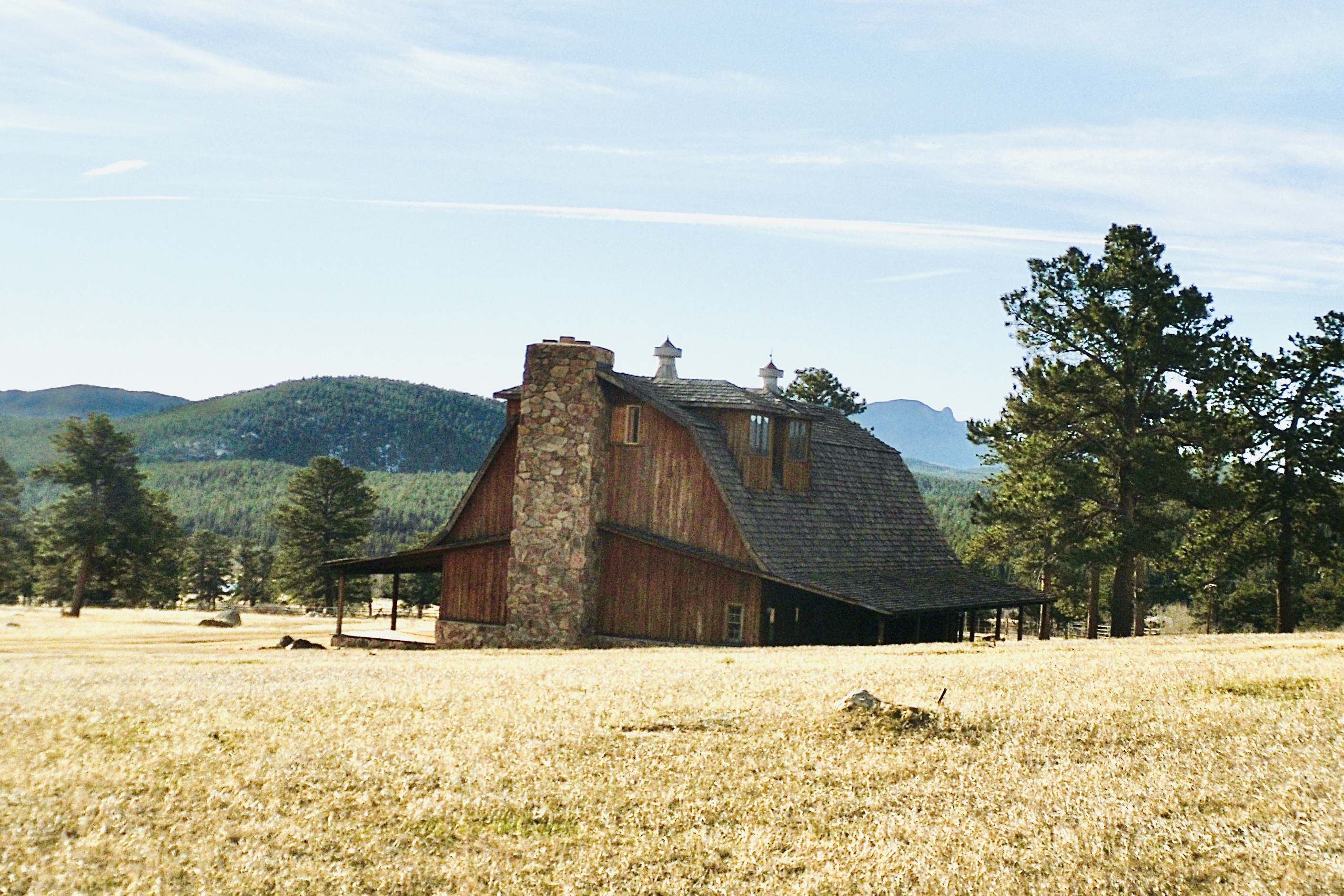
Needless to say, there would be some cultural clashes brought about by the introduction of these 1970s rock icons into a slow-paced mountain town, and friction was almost inevitable. I used this as a backdrop for Ty Dawson’s world, which is also a useful literary metaphor for the changing times inherent in the 1970s, writ large.
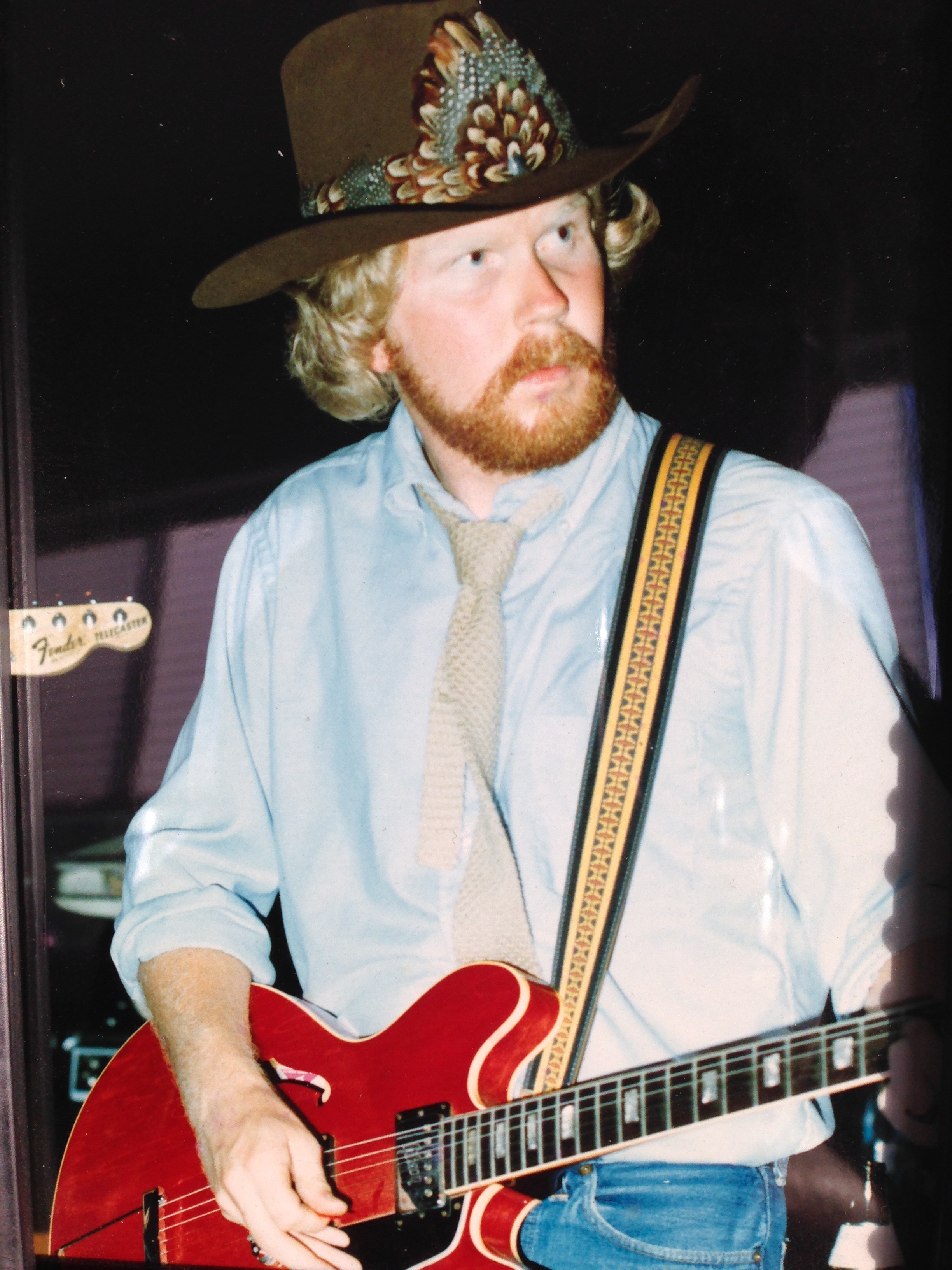
The author in his days as a musician:
Q: On the subject of the music studio and production brought into Ty’s world, your background as a musician and producer had to have an influence, didn’t it? I could feel that experience seeping from the page.
That is very kind of you to say, Jim. You know how much I admire the way you subtly weave your life experience into your fantastic books. From you, I will take that as a fine compliment. I like to use subtle references to music, song titles, etc. into the narrative if only for ambience and dimensionality to the story and its setting. Of course, it doesn’t hurt that there was so much superlative music created during that era.
Q: I’m going to gush here a bit. You are one of the most talented authors I know. Your prose has been compared to James Lee Burke, and Knife River was recently awarded the Will Rodgers Medal for excellence. Where does that very lyrical, hypnotic prose come from?
Haha! Again, coming from you, a tremendous compliment–thank you very much. Those comparisons are humbling, as I consider James Lee Burke to be one of the finest, most elegant writers of our generation. I suppose my own writing style is rooted in my having been a songwriter early in my music career, and because you’re trying to pack a great deal of emotion into a very short span of time in that discipline, word choices are vitally important when crafting a song, or poem, or any short-form narrative. My books don’t tend to be overly long, so I try to take care in my descriptions of people and places, and of course, the dialogue.
I have always admired those authors who are such adept world-builders–people like Sam Shepard, Larry McMurtry, James Lee Burke, and Frank Herbert. They (and others, such as yourself) have set the bar for excellence in my opinion.
Q: Ty is coming back with another book this spring. Can you tell us a little about that?
Ty Dawson will definitely be back for the fifth book in the series, TELEGRAPH ROAD. It is set in [fictional] Meriwether County, Oregon, in 1976 on the eve of America’s bicentennial. A nameless newcomer to the area is found brutally murdered near a lake at the north end of the county–in the tiny town called Shiloh, whose roots reach back to the gold rush, and whose residents prove themselves both secretive and insular as Sheriff Ty Dawson investigates the murder, only to discover the victim is far more than first appearances suggest, and the shadows of Shiloh’s dark past begin to creep into the light.
Q: What’s next?
I wish I was as prolific as my good friend, James L’Etoile, but sadly, I am not (though I am jealous that you are able to craft such fantastic thrillers–in two separate series, no less)!
As for me, I’m currently working on book 6 in the Ty Dawson series, and toying with writing a new installment of the Mike Travis series– Thanks for asking! And thank you for inviting me to contribute to Book Shots! Always great fun to hang out with you.
Here’s where you can find your copy of Baron’s fine work–and you should!
Amazon Barnes & Noble Bookshop.org
Let Baron know what you think about his body of work, or leave a question for him in the comments below.
Hope you enjoyed Book Shots, please keep checking back and give me your recommended mystery authors for a future session. Up next will be Karen A. Phillips with her new mystery, A Deadly Hook.
Book Shots
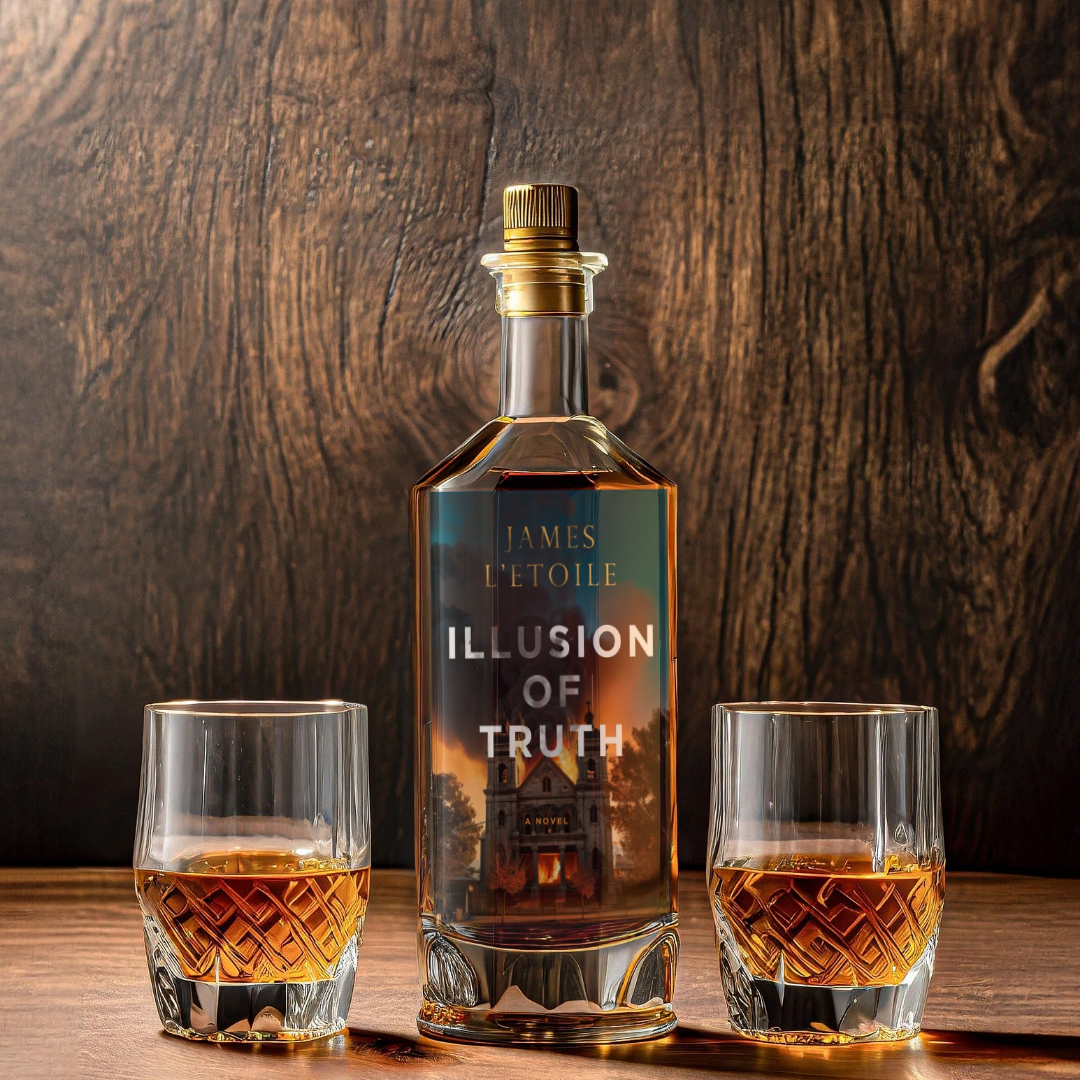
Illusion of Truth available now. Book #3 in the Detective Emily Hunter series


 James L'Etoile
Great article! I love both your and Baron’s series!!
Thank you! Baron is one of the most talented authors in the business. Really looking forward to his next book.
Me, too! It has been a while.
[…] Some may be familiar faces, and others–well, you might just find your new favorite author. You may have caught the interview with Baron Birtcher […]